
Sewage Cleanup in Santa Barbara CA — Category 3 Black Water Remediation
Raw sewage is Category 3 black water — the highest contamination classification under IICRC S500 water damage standards — and it carries E. coli, Salmonella, hepatitis A, norovirus, and other pathogens that spread rapidly through porous materials. A sewage backup in a Santa Barbara home does not stop at the visible waterline: contaminated water wicks into hardwood subfloors, through grout lines into tile backing, through baseboard gaps into wall framing, and into crawlspace insulation. Fixr reports sewage cleanup costs nationally in the $2,000–$10,000 range depending on scope and affected materials. In Santa Barbara's pre-1980 housing stock, sewage events routinely involve structural material removal rather than simple extraction and drying.
Call now for a free on-site assessment: 123-456-7890
Work is performed by independent professionals.
Why Sewage Backup Is More Serious Than It Appears
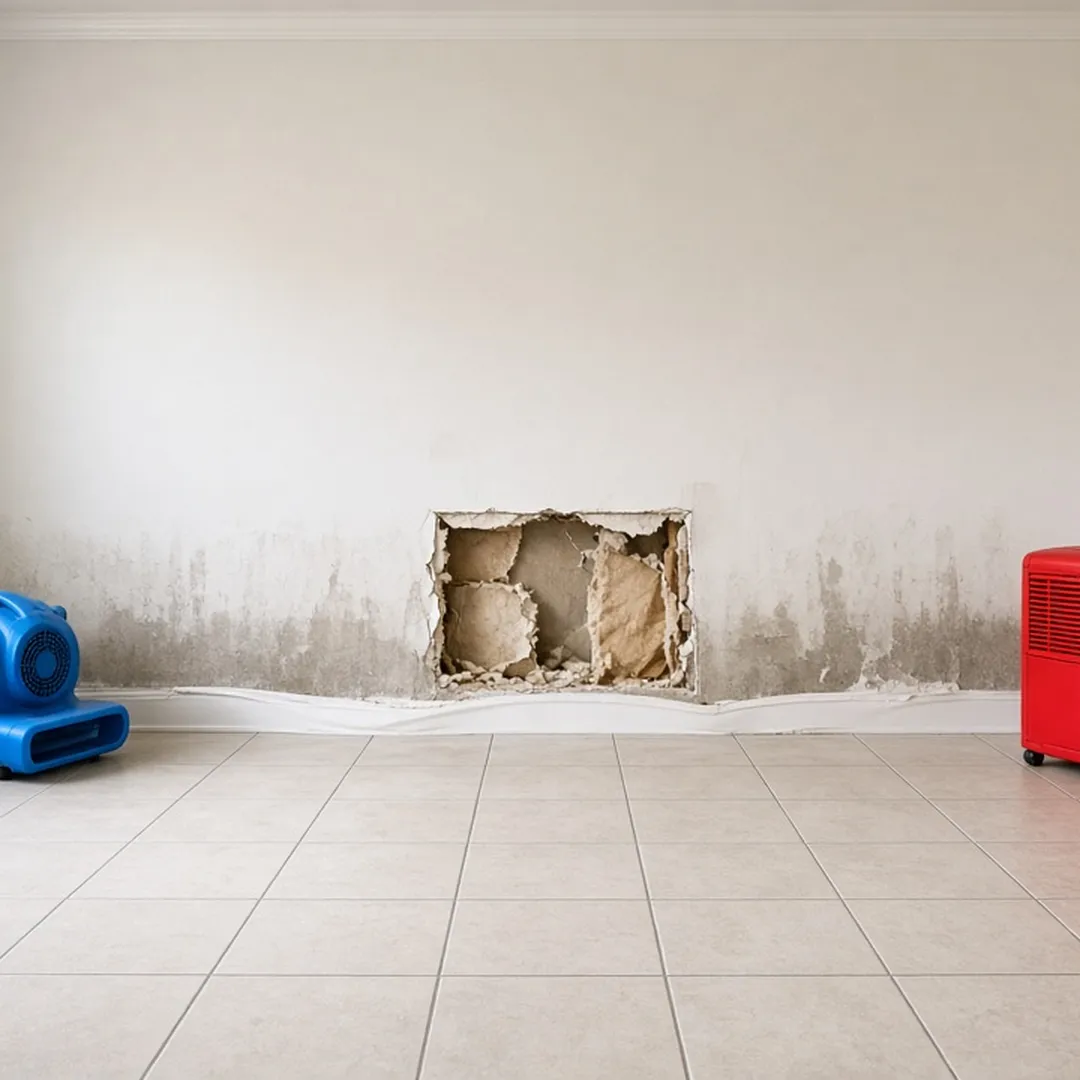
A sewage backup that pushes water across a bathroom floor looks like a contained problem. It is not. Within the first hour, contaminated water has wicked:
- Through hardwood or tile grout into subfloor sheathing
- Through wall base materials into the lower six to twelve inches of drywall or plaster
- Under doorways into adjacent rooms
- Through floor seams into crawlspaces
The pathogens in sewage — including hepatitis A, which survives on surfaces for months — do not become safe through air-drying. Surfaces exposed to Category 3 water require antimicrobial treatment or replacement; drying alone is not a remediation strategy.
Secondary mold growth begins within 24 to 48 hours in materials that retain moisture after a sewage event, particularly in coastal Santa Barbara where ambient humidity during the November–March wet season slows structural drying in properties with limited ventilation.
Santa Barbara's Sewer Infrastructure and Flood Risk
Santa Barbara's sewer infrastructure runs through a county with significant age variation across neighborhoods. The Eastside, the Mesa, and older downtown neighborhoods feature aging lateral connections that are prone to root intrusion and debris blockage, which causes backpressure that pushes sewage back into lowest-fixture drain points — floor drains, toilets, and shower drains at or below grade.
During the November–March wet season, Santa Barbara's annual precipitation is heavily concentrated (annual average 18.9 inches, NOAA 1991–2020 normals, station USC00047902) — and significant rainfall events can overwhelm capacity in older combined or partially-combined sewer sections, producing municipal backpressure that reaches individual properties. Properties in Carpinteria, Goleta, and lower-elevation Isla Vista face similar conditions.
Homes built in the 1960s and 1970s — the two largest construction decades in Santa Barbara County at 19.4% and 18.1% of the housing stock respectively — are most likely to have original lateral lines that have never been replaced. Original clay or cast iron laterals develop cracks and root intrusion over time, creating conditions for recurring backups.
What We Do at a Sewage Backup
First, we establish the source and scope. Sewage backups originate from a blockage in the lateral line, from a main sewer blockage, or from municipal system backpressure. The source must be confirmed resolved before cleanup — remediation of a property with an active blockage is incomplete. We confirm the source before beginning extraction.
Second, we extract all standing sewage water using truck-mounted vacuum extraction equipment, reaching under cabinets, into corners, and into floor drain areas.
Third, we assess structural involvement — probing subfloor moisture levels, testing lower wall sections for wicking, checking crawlspace conditions. We identify which materials require removal versus which can be dried to safe moisture levels with professional equipment.
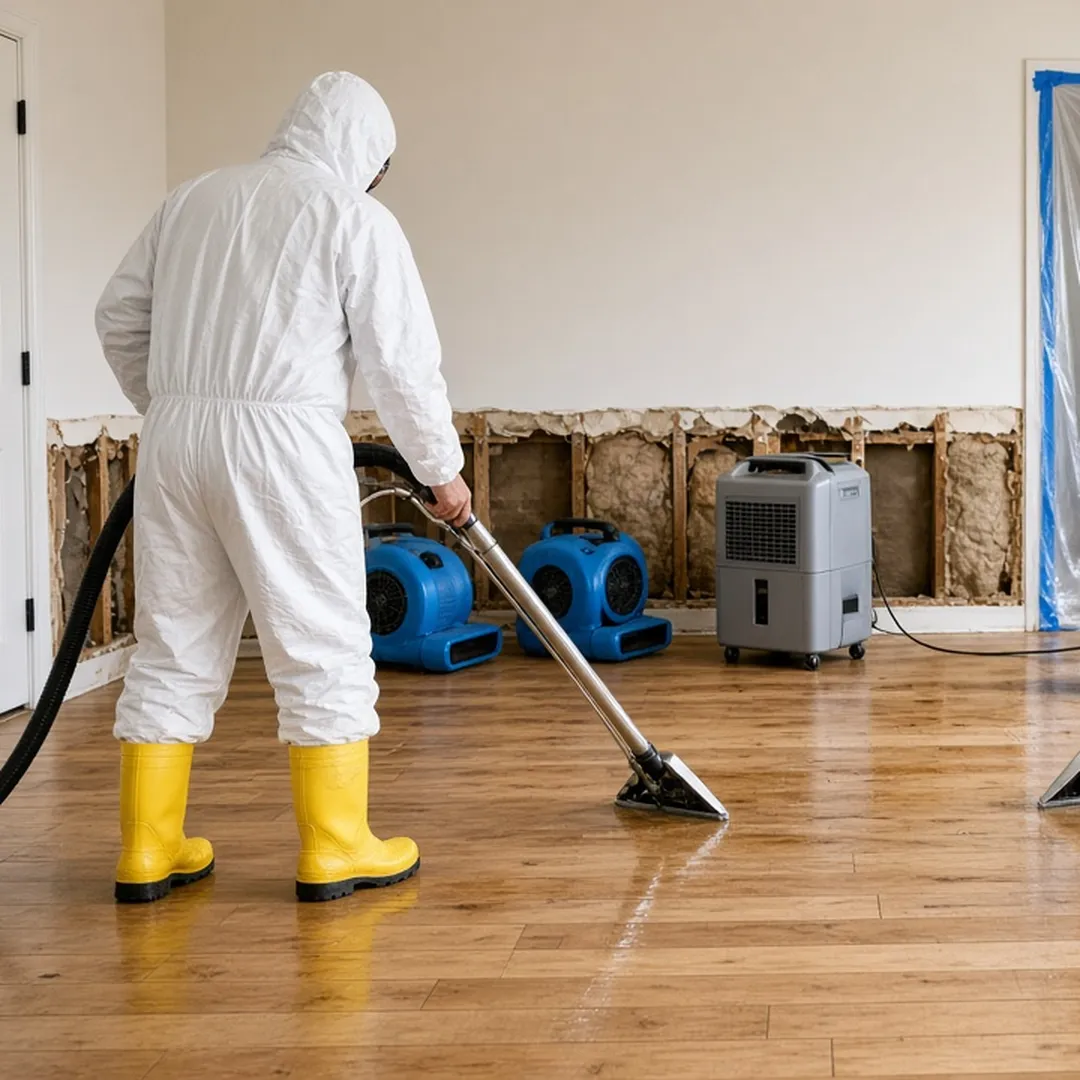
Fourth, we remove all contaminated material that cannot be dried to safe moisture levels: sections of drywall, baseboard, insulation, damaged flooring, and affected subfloor sheathing. All removed material is handled under biohazard disposal protocol.
Fifth, we treat all affected surfaces — concrete slab, wall framing, structural elements — with EPA-registered antimicrobials rated against the pathogen profile present in sewage waste.
Sixth, we deploy commercial-grade desiccant drying equipment to bring structural moisture readings to safe levels in remaining materials, monitoring with moisture meters throughout the process.
Finally, we provide written documentation: scope report, photographs, moisture readings at start and completion, materials removed, and antimicrobial treatment records — everything your insurance carrier requires.
Insurance Documentation for Sewage Events
Standard homeowner's policies exclude sewage backup unless a water backup rider is included. Commercial and landlord policies carry broader sewage coverage. Whether or not coverage applies:
- If you have backup coverage: we provide the full documentation package your adjuster requires to process the claim
- If you don't have backup coverage: we document the event thoroughly anyway, because the documentation is what you need if you pursue recovery from a municipal system overflow or a neighboring property's sewer lateral issue
Do not call your insurer before calling us. We walk you through the documentation process first, which protects your claim.
What Sewage Cleanup Costs in Santa Barbara
Fixr reports sewage backup cleanup nationally in the $2,000–$10,000 range depending on the volume of sewage, materials affected, and the extent of structural involvement. In Santa Barbara's pre-1980 housing stock, structural material removal drives costs toward the higher end of that range more frequently than in newer construction.
Cost factors at a Santa Barbara sewage event:
- Scope of water spread: a bathroom floor versus a crawlspace saturation
- Flooring type: tile with original mortar-bed backing, hardwood over plywood sheathing, and slab-on-grade concrete each present different remediation requirements
- Drywall involvement: lower wall sections that absorbed sewage water require removal
- Crawlspace access: affected crawlspaces require separate extraction, treatment, and drying work
- Mold: events that were not addressed promptly, or that occurred in a property with prior moisture issues, may require mold remediation alongside sewage cleanup
Figures from Fixr (January 2025). Final scope and pricing require on-site assessment.
Frequently Asked Questions
Is sewage cleanup a biohazard situation?
Yes. Raw sewage is classified as Category 3 black water under IICRC S500 standards, containing pathogens including E. coli, hepatitis A, and norovirus. Surfaces exposed to sewage water require antimicrobial treatment or removal — not just drying. We treat sewage events under the same pathogen protocols as other biohazard work.
Will homeowner's insurance cover sewage cleanup?
Standard homeowner's policies exclude sewage backups unless a water backup rider is specifically included. Commercial and landlord policies carry broader coverage. We document every sewage event thoroughly regardless of coverage status — the documentation protects your options.
How quickly do mold issues develop after a sewage event?
Mold colonization begins within 24 to 48 hours in materials that remain wet after sewage exposure. In coastal Santa Barbara during the wet season, ambient humidity slows structural drying and accelerates mold growth in poorly-ventilated spaces. The fastest way to prevent mold after a sewage event is professional extraction and drying within 24 hours of the backup.
Do you need to identify the source of the backup before cleanup?
Yes. We confirm that the source of the backup is resolved before remediating the property. Cleaning a property with an unresolved lateral blockage or active main line issue will be undone by the next backup event. We confirm the source with you before beginning work.
Does sewage cleanup require a CDPH-registered practitioner?
Sewage cleanup falls under IICRC water damage remediation standards rather than California's trauma scene waste management framework in most cases. However, when sewage backup occurs alongside another biohazard event — a property where an unattended death occurred, for example, or a hoarding property with sewage accumulation — CDPH registration requirements apply. We are CDPH-registered practitioners and apply the appropriate protocol to the conditions present.
Biohazard Cleanup Santa Barbara